
Even before stepping into a baby store, most future parents feel a mix of excitement and dizziness at the extent of possible purchases. Choosing equipment for the arrival of a baby is not just about ticking off a list. Some products will be used from the very first hour at home, while others can wait several weeks.
Distinguishing the true essentials from superfluous accessories helps avoid unnecessary spending and approach the birth with more serenity.
Mattress and baby bed: the pitfalls that classic lists overlook
The sleeping arrangement is the first item to decide on, as a newborn sleeps the majority of the day during the first months. Crib, bassinet, or co-sleeping bed: the choice of the container matters less than what goes inside it.
Have you noticed that many baby registries include a crib bumper, a comforter, or a positioning pillow? These products are, however, not recommended by health authorities for infant sleeping. The bed should remain strictly empty: no stuffed animals, no thick blankets, no pillows.
The mattress deserves special attention. It should be firm and fit snugly in the bed, leaving only a few centimeters of space with the walls to reduce the risk of entrapment and suffocation. To find all the equipment on Niddou, parents can compare the exact dimensions of the mattress with those of the bed before purchasing.
The sleeping bag is a great alternative to a blanket. It keeps the baby at a good temperature without the risk of suffocation. Plan to have two so you can alternate during laundry.
Car seat and stroller: what conditions the return from maternity
Without an appropriate car seat, it is impossible to leave the maternity ward by car. It is one of the few pieces of equipment you will need on the day of the birth. Why does this choice deserve prior consideration? Because not all car seats fit all vehicles, and a bad purchase is discovered at the worst moment.
Opt for a newborn car seat (group 0/0+) compatible with an isofix base if your car is equipped with one. Test the installation before the expected delivery date: a poorly secured seat does not provide proper protection.
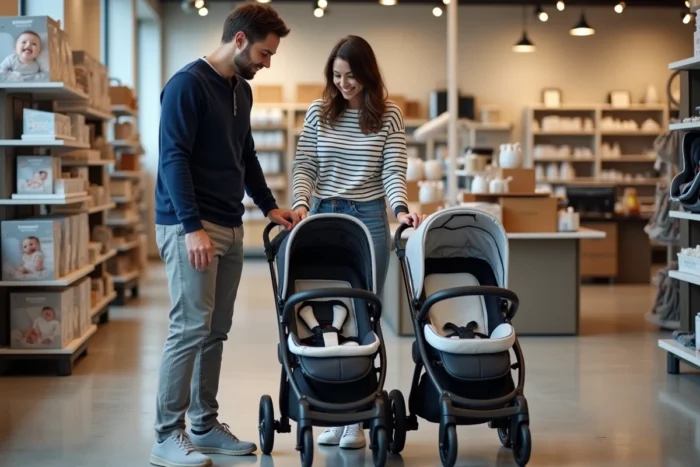
For the stroller, a common pitfall is buying a bulky model that doesn’t fit in the trunk or the elevator. Before falling for a design, measure your trunk and doorways. A chassis compatible with the car seat offers flexibility during the first outings when the baby still sleeps a lot.
Baby carrier or wrap
Carrying is not just a simple comfort accessory. For some parents, it replaces the stroller on a daily basis, especially in urban areas. A physiological baby carrier properly supports the newborn’s posture (frog position, rounded back). The woven wrap offers similar support but requires time to learn how to master the knots.
Diapering and hygiene: choosing products suitable for the infant’s skin
Diapers and wipes represent the most recurring expense. For hygiene products, composition matters as much as price.
Early childhood structures, such as nurseries, often prefer oleocalcareous liniment or water and cotton over industrial wipes. The preservatives found in many commercial wipes can irritate the very sensitive skin of infants. Warm water, cotton, and liniment are sufficient for daily diaper changes.
- For the changing table: a changing mat with a washable cover, cotton, liniment or a fragrance-free washing gel, and a diaper bin to contain odors.
- For the bath: a baby bathtub (or a bath reducer), a bath thermometer to check the water temperature, and two or three bath towels.
- For the initial stock: a pack of newborn size diapers and a pack of size 1, because the newborn’s morphology can be surprising and the right size is confirmed after the first few days.
Newborn clothing: buy little but well-fitted
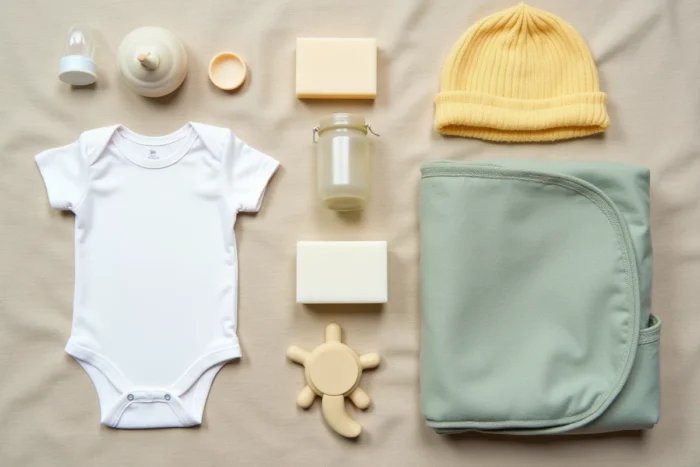
The temptation to accumulate miniature outfits is strong. In practice, a newborn soils several bodysuits a day and grows very quickly. Six to eight bodysuits and as many pajamas in newborn size cover the first two weeks.
Choose soft materials (preferably organic cotton), wide openings at the neckline, and snaps rather than buttons. Cross-over clothing, known as “wrap” style, makes dressing a baby who doesn’t like to put their head through a narrow neckline easier.
Also plan for socks, a hat for the maternity ward, and a small jacket depending on the season. Everything else (shoes, miniature jeans, ceremony outfits) can wait without any problem.
Baby meals: bottle or breastfeeding, the essentials differ
If you are breastfeeding, the starting equipment is limited to two or three nursing bras, nursing pads, and possibly a breast pump (often prescribed after birth according to needs). No need for bottles at the beginning.
If you choose to bottle-feed from birth, plan for:
- Four to six small capacity bottles with slow-flow nipples for newborns.
- A bottle brush for cleaning, and a sterilizer if you wish to sterilize (recommendations vary by country and pediatricians).
- A supply of first-age infant formula, chosen with your healthcare professional.
The high chair, learning utensils, and bibs will only be useful from the time of introducing solid foods, around four to six months. No need to buy them before birth.
The best advice to avoid getting lost in purchases is to separate what is necessary from day one (sleeping arrangements, car seat, diapers, a few clothes) from what can be added over the weeks. A baby primarily needs a safe bed, available arms, and parents who are not exhausted from running through the aisles.