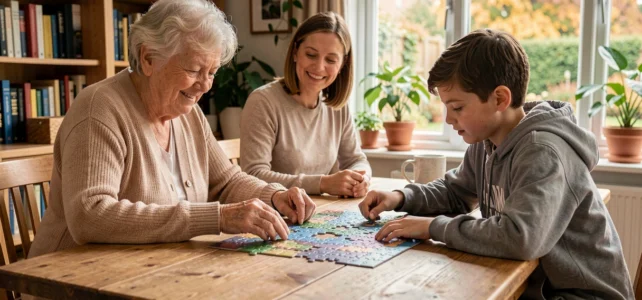
Walking and hiking now involve a large majority of French people, across all age groups. According to the Union Sport & Cycle, 62% of French people have practiced walking or hiking in the last 12 months, with a notable increase among 18-49 year-olds since 2021. This shift towards accessible and multigenerational leisure activities is reshaping the landscape of possible activities, well beyond just a simple family weekend.
Outdoor leisure: why hiking dominates practices in France
The data from the National Sports Practices Barometer 2025 (INJEP) confirms a fundamental trend: walking, hiking, Nordic walking, and jogging overwhelmingly dominate regular physical leisure activities across all ages. The increase reaches 8 to 10 points among 18-49 year-olds compared to 2021.
This success is due to the absence of technical barriers. No need for club membership, expensive equipment, or a specific physical level. A marked trail, a pair of suitable shoes, and a backpack are enough for a two-hour outing or a full day in nature.
To explore all activities on La Star du Web, walking remains a logical entry point before turning to more engaged practices like trail running or Nordic walking.
Seniors find it helps maintain mobility without high joint risk. Families with children adjust the distance to the pace of the youngest. Field reports vary on the level of equipment needed depending on the type of route, but the French Hiking Federation reminds us that the choice depends on the terrain and duration.
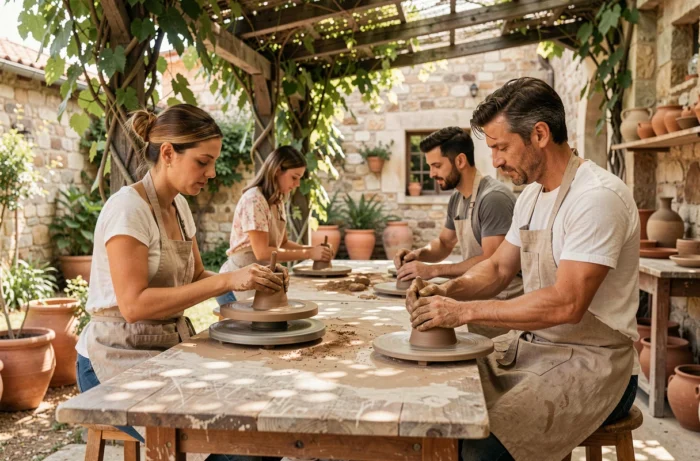
Slow living and guided disconnection: activities that appeal to all generations
Slow living, long associated with retirees or wellness enthusiasts, is now establishing itself as a form of leisure adopted by both 20-35 year-olds and older individuals. This trend encompasses concrete practices: stays in converted vans, screen-free retreats, weekends in rural lodges without wifi connection.
Slow travel, a variant applied to vacations, favors a slow pace, short stages, and local immersion rather than accumulating visits. Available data shows that multigenerational travel is experiencing significant growth, driven by families seeking shared experiences among grandparents, parents, and children.
However, the cost of certain options (converted vans, unusual accommodations) remains a real barrier. 60 Millions de consommateurs emphasizes that vacations in converted vans are not necessarily economical. Freedom comes at a price, and the budget varies greatly depending on the season and region.
Accessible disconnection activities without a high budget
- Day in the forest with a picnic and wildlife observation, without a phone: free, suitable from age 4-5 and up to any age
- Community gardening workshop in a municipal shared garden: many municipalities offer plots, often free or at a symbolic price
- Photographic walk in the city or nature with a basic camera: a creative activity that works well with both teenagers and seniors
Games and family experiences at home: what works beyond the cliché
Board game nights regularly appear in recommendations for families. The field observation is more nuanced: the choice of game determines the success of the activity. A cooperative game (where all players collaborate against the board) avoids frustration among younger players and keeps adults engaged.
Cooking as a family, often mentioned, works as long as each age group is involved in a suitable task. A 4-year-old can mix dough. A teenager can manage cooking. The adult supervises without monopolizing. The result (a shared dish) creates a concrete moment, not an abstract activity.
Scientific experiments and DIY: underestimated for 6-12 year-olds
Simple scientific experiments (baking soda volcano, crystal growing, building a basic electric circuit) offer a double benefit: long-lasting engagement and learning through manipulation. These activities require little equipment, often already available at home.
Creative DIY (cardboard construction, painting on pebbles, making games like a tin can knockdown) remains a reliable choice for vacations. The preparation time often exceeds the playtime, making it a standalone activity rather than just a pretext.
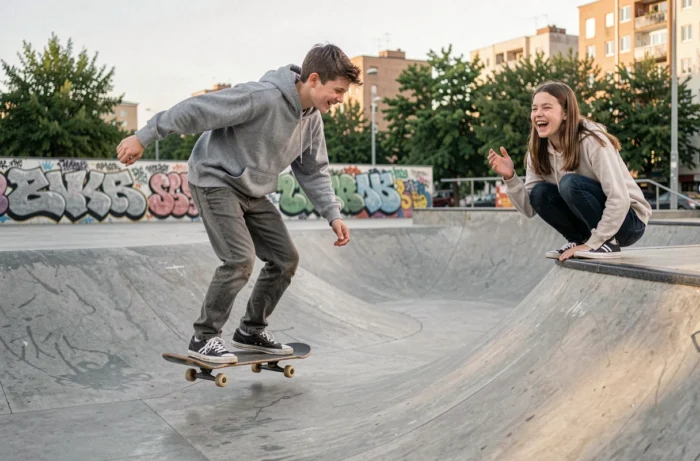
Guided activities in amusement parks and nature outings: concrete selection criteria
Amusement parks (tree climbing, paintball, go-karting) attract varied profiles, but the choice of location deserves analysis beyond geographical proximity. Two criteria determine the quality of the experience: the minimum age that is actually practicable and the supervision ratio.
- Tree climbing: check the courses suitable for under 8s, often limited to one or two circuits throughout the park
- Supervised water activities (canoeing, paddleboarding): regulations for collective youth accommodations impose specific safety and supervision standards for swimming
- Multi-activity parks: prefer those that offer at least three different types of activities to fill a full day without repetition
- Guided nature outings (ornithology, botany): often free through tourist offices or local associations, and adaptable from ages 6 to 80
The safety obligations of sports associations overseeing these activities are defined by the legal framework for collective youth accommodations. Checking the accreditation and insurance of the provider is not an unnecessary precaution; it is a regulatory requirement.
The choice of a leisure activity suitable for all ages relies less on the nature of the activity than on its ability to be modulated. A 3 km hike is suitable for a 5-year-old as well as a 75-year-old grandparent, provided the pace and breaks are adjusted. The most sustainable activities are those that require neither competition nor performance, but rather shared presence.