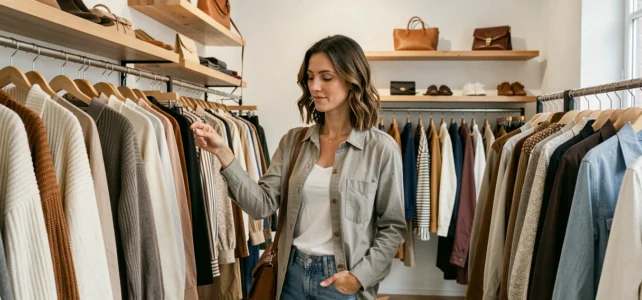
The French fashion market is undergoing a period of voluntary contraction in purchases. Households are reducing their clothing expenses, and the number of items bought per person continues to decline in 2026 according to the Worldpanel study. In this context, achieving a daily look relies less on accumulation and more on precise choices: versatile pieces, well-placed accessories, and embraced second-hand items. Here are five concrete levers to build a trendy style with a streamlined wardrobe.
1. Light layering to multiply silhouettes
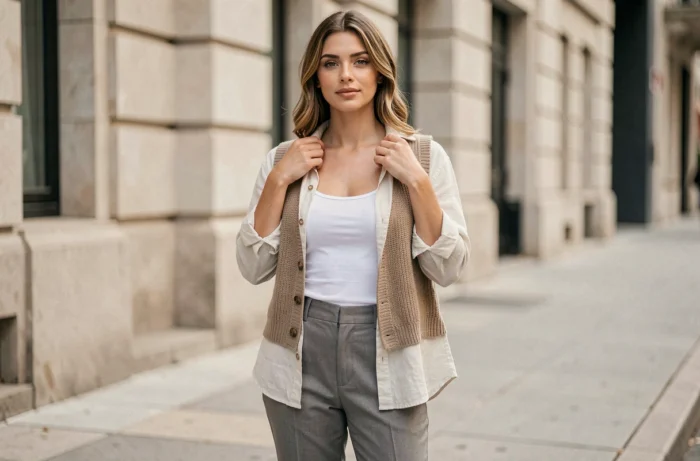
Layering two or three thin layers transforms a mundane outfit into a structured silhouette. A plain t-shirt under an open shirt, itself tucked under a deconstructed blazer, creates three distinct looks depending on what you remove throughout the day.
The key lies in the contrast of materials. Pairing cotton with ribbed knit or linen with a slightly satin fabric adds depth without overwhelming. The cuts should remain close to the body on at least one layer to avoid the “unstructured layering” effect that weighs down the silhouette.
Layering maximizes every piece in the wardrobe by making it combinable in multiple ways. When the fashion budget tightens, this technique directly compensates for the low volume of purchases. Instead of acquiring ten items worn in isolation, five well-chosen pieces can generate around twenty credible combinations. This logic is also found in Blospot’s fashion advice, which prioritizes the versatility of pieces over the constant renewal of the wardrobe.
2. The structuring belt to redefine a silhouette
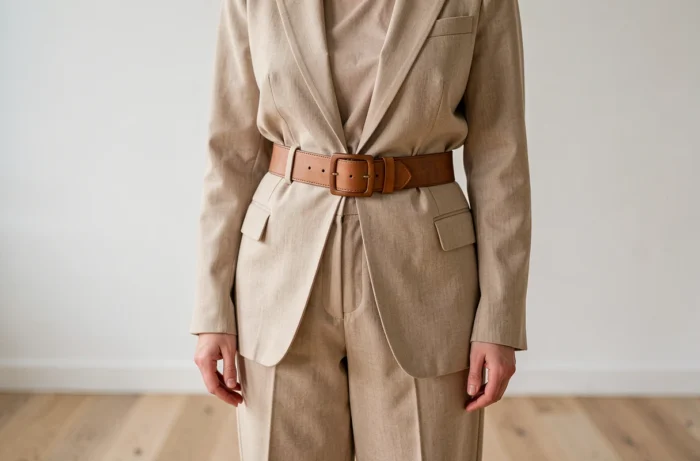
One accessory can change the perception of an entire outfit. The belt restructures the proportions of an oversized dress, a straight coat, or high-waisted pants worn with a tucked-in top. This gesture takes a few seconds and radically changes the reading of the silhouette.
Smooth leather models, of medium width, work with most wardrobes. Discreet buckles transition from office to weekend without a hitch. However, very wide belts or those with prominent logos limit combinations and visually age faster.
One point that style guides rarely address: the belt also compensates for the cutting flaws of a second-hand piece. A slightly oversized vintage blazer gains structure as soon as it is belted. This trick makes buying second-hand much more accessible, as the exact size becomes less critical.
3. Second-hand as a source of strong pieces
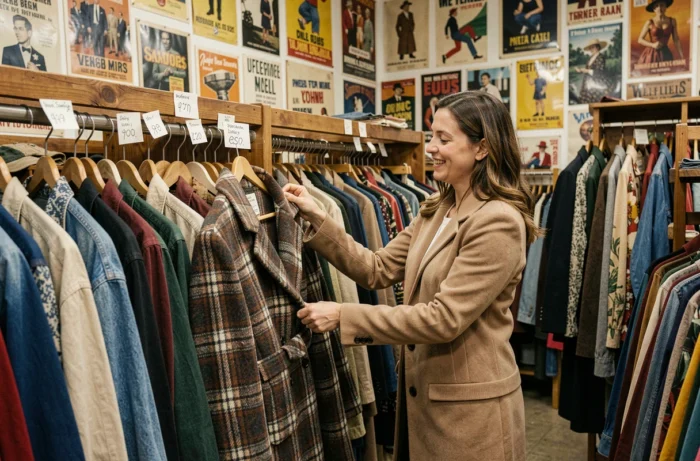
Buying second-hand is no longer a marginal practice. The French second-hand market is now worth several billion euros, and resale platforms have become a reflex for a majority of consumers across all age groups.
For everyday style, second-hand offers an advantage that new items cannot replicate: access to designer pieces or cuts that are no longer in production. A 2000s Burberry trench coat, a Levi’s denim jacket from a discontinued cut, a leather bag aged by time – these elements provide a uniqueness that is impossible to obtain in mass retail.
Field reports vary on this point, but the quality of vintage pieces varies greatly depending on the platforms and sellers. A few reliable reflexes before buying:
- Check the seams at the armholes and crotch, areas where wear is most quickly noticeable
- Prefer natural materials (wool, thick cotton, silk) that age better than synthetics
- Compare the second-hand price with the current new price to spot false good deals
4. Choosing neutral colors enhanced by a unique accent
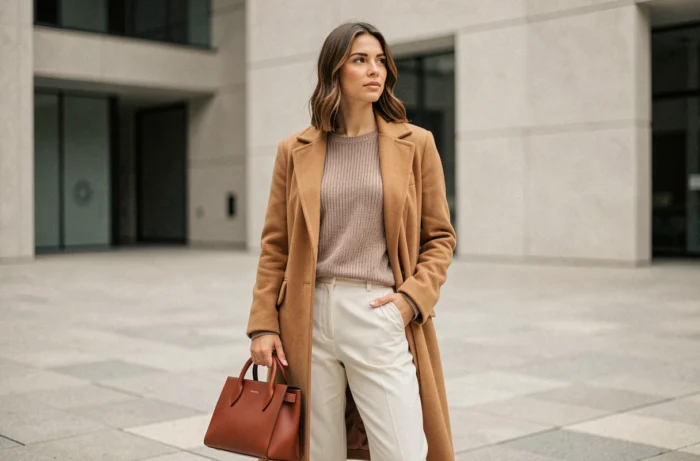
The neutral palette (off-white, beige, heather gray, navy blue, black) forms a base that most body types and skin tones can wear without risk. Adding just one colored element is enough to personalize the whole: a terracotta scarf, visible brick-red socks, a pair of enamel earrings.
This method solves a common problem: the fear of “mismatching.” When the base is neutral, almost any accent works. The result appears intentional without requiring advanced color coordination skills.
Current trends confirm this approach. Recent fashion shows feature almost monochrome wardrobes broken up by a statement piece of jewelry or a brightly colored bag. This principle easily translates to everyday life, provided the accent is limited to a single focal point. Two or three bright colors at once muddle the reading and require a much sharper sense of proportion.
5. Jewelry as a permanent visual signature

Clothes change, but jewelry remains. Wearing the same jewelry pieces daily creates a recognizable signature that transcends outfit variations. A signet ring, a fine chain, a bangle: these constant elements anchor personal style.
The choice of metal matters more than the number of pieces. Gold (or gold-plated) warms up warm skin tones, while silver structures cool skin tones. Mixing the two metals works as long as it is a deliberate choice, not an accident.
- Wear a maximum of three pieces of jewelry together to maintain a clean effect
- Prefer pieces without stones or with discreet stones for everyday use without the risk of snagging
- Choose sturdy closures (lobster clasp rather than spring clasp) to avoid losing favorite pieces
Jewelry is also the area where second-hand and local craftsmanship offer the best uniqueness-price ratio. A ring found at a flea market or purchased from an independent designer will not be seen on the wrists of ten colleagues, unlike collections from major retailers.
Building a trendy style for everyday life does not require a substantial budget or constant wardrobe renewal. A few versatile pieces, a structuring accessory, a controlled touch of color, and jewelry worn as a signature are enough to create cohesive looks. The current contraction in the fashion market is precisely pushing in this direction: buy less, combine better.