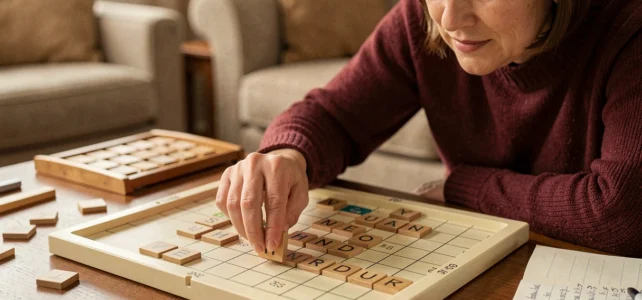
One plays ace at the end of the game, convinced of scoring some easy points on a double word score, and the opponent contests it. This situation is common because the status of this three-letter word in the official lexicon of French Scrabble is not straightforward. Ace is a term everyone knows thanks to tennis, but its validity on a Scrabble board depends on a single document: the ODS, the official dictionary used in competition.
Ace and the ODS: a word rejected in sanctioned tournaments
The natural reflex when unsure about a word is to check online. Several sites list ace as valid and assign it a value of 5 points. The problem is that these verifiers are not authoritative in competition. The official decision rests with the current ODS, and that is the only reference an arbiter will consult during a sanctioned tournament.
According to an article from Chronique Française dated August 4, 2026, ace is absent from the ODS. In practice, despite its common usage in French to refer to a winning serve in tennis, the word is not playable in an official French-speaking game. We detail the use of ace in Scrabble in a broader context, but the rule remains the same: absent from the official dictionary, absent from the board.
This gap between online tools and the reality of tournaments regularly traps players, including experienced ones. A word may appear in Wiktionary, in the Robert, or in any general dictionary without being accepted in the ODS.

Point value and calculation on the Scrabble board
Even though ace is contestable in tournaments, it is often encountered in friendly games or on word game apps that use broader lexicons. In this context, the word scores 5 points in Scrabble excluding square bonuses.
Letter-by-letter breakdown
The calculation is simple. The letter A is worth 1 point, C is worth 3, and E is worth 1 point. Gross total: 5 points. This score can increase with clever placement on the bonus squares of the board.
- On a “double letter score” square under the C, the word goes up to 8 points (1 + 6 + 1).
- On a “double word score” square, the total reaches 10 points.
- Alongside another word formed vertically, the points from both created words are accumulated.
With only three letters, ace will never be a decisive move in terms of score. Its interest lies elsewhere: emptying your rack of common letters to prepare for the next turn.
Short words accepted in the ODS: concrete alternatives to ace
French Scrabble is full of two or three-letter words that score as much, if not more, and pose no validity issues. When losing ace, reliable substitutes are needed.
Words like xi or wu are sometimes perceived as exotic, but they are indeed in the ODS. Others, like ya, have a status that varies according to the dictionary editions. Intuitive logic does not work to guess which short words are accepted: a widespread anglicism may be rejected while a rare term of foreign origin passes without difficulty.
- Xi (Greek letter) is valid and scores more thanks to the X, which is worth 10 points on its own.
- Wu is accepted in the ODS and allows for placing a W, which is often cumbersome on the rack.
- Classics like an, en, ou, ai remain reliable options to unlock a situation where the board is locked.
Feedback on this point varies among player circles, but the most reliable strategy remains to memorize a list of two and three-letter words validated by the latest edition of the ODS. This list changes with each update of the dictionary, making habits sometimes misleading.
Placement tips for short words in Scrabble
Playing a three-letter word is not just about finding an open space. In a tight game, placement matters as much as the word itself.
Creating parallel words
The most profitable technique with a short word is to place it parallel to a word already on the board, thereby forming two or three new words simultaneously. Each intersection generates an additional word whose points are added. A word worth 5 gross points can yield 15 or 20 points thanks to the crosswords formed in the other direction.
Aiming for bonus squares at the end of the game
The “triple word score” squares located at the edges of the board often remain free at the beginning of the game. A short word played at the right moment on one of them can overturn a score gap. Keeping a high-value letter for a bonus placement is a habit that distinguishes regular players from beginners.
The defensive interest is also underestimated: placing a short word next to a bonus square prevents the opponent from exploiting it with a long word. This sacrifice of a few immediate points protects against a move worth 50 or 60 points in the next turn.
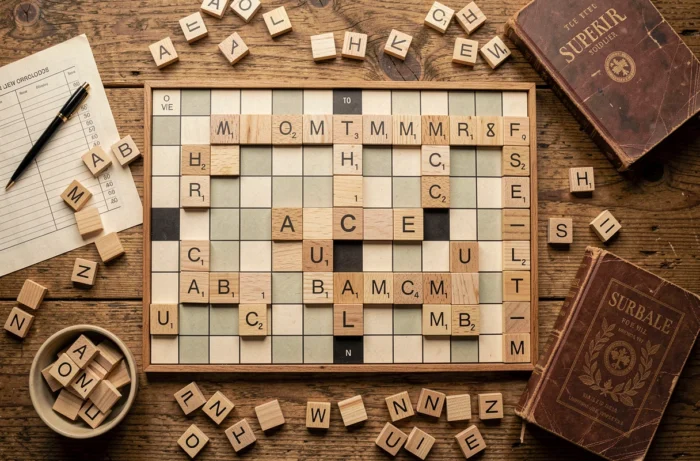
Ace remains a word that many players instinctively try to play, especially when the rack offers few options. In a friendly game, no one will contest it. In competition, it’s better to forget it and rely on the short words validated by the ODS, even if it means investing some time in memorizing this list. The board rewards precision, not familiarity.