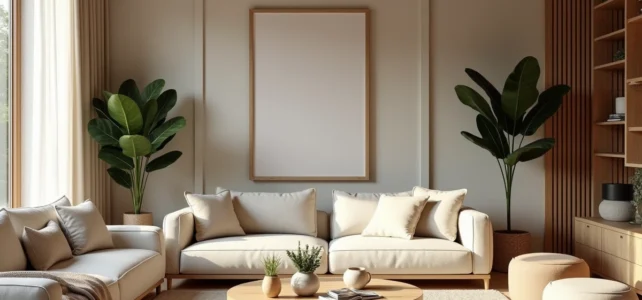
A sofa that no longer fits, a white wall that feels tired, a room that lacks character: we all know that moment that pushes us to rethink the layout of our interior. No need for a weeks-long renovation to change the atmosphere of a living room or bedroom. Here are ten concrete ideas, quickly applicable, to give new life to your living space.
1. Accent wall with lime or mineral effect paint
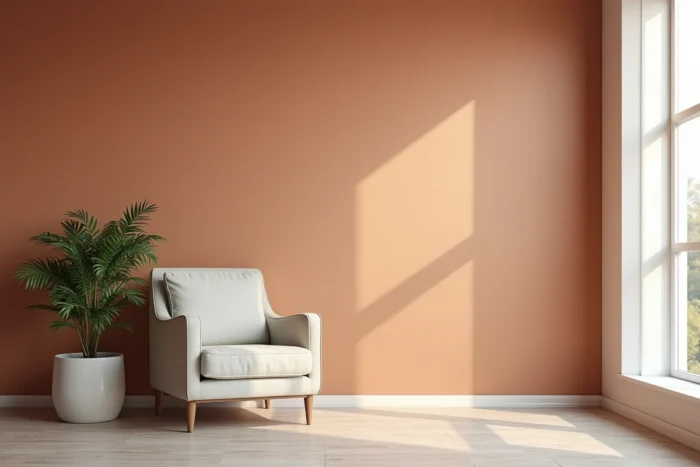
We start from a simple observation: a single wall treated differently is enough to redefine the perception of an entire room. Lime or mineral effect paints provide a depth that classic matte paint does not. The slightly irregular finish captures natural light and creates a subtle relief.
In practice, prepare the wall (filling, primer), then apply the paint in cross passes with a trowel or a brush. The result can be achieved in a day. One textured wall transforms the ambiance of an entire living room. Earthy tones, rosy beige, or sage green work well in both living rooms and bedrooms.
You can easily find layout ideas at maisonfjord.fr to choose the shade that suits the brightness of your room.
2. Wainscoting with wooden slats or decorative moldings
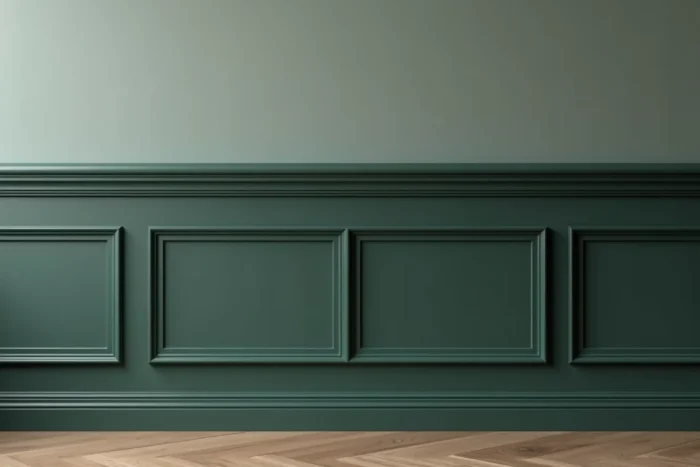
Research on textured walls and decorative moldings has exploded in recent years on Pinterest. The idea is to visually structure the lower part of a wall without launching into major renovations. Wooden battens glued or nailed at mid-height, painted in the same tone as the wall or in a light contrast, are enough to dress up a hallway, living room, or headboard.
The wainscoting with moldings also works very well in rentals: you can attach MDF strips with repositionable glue, then remove them when you leave. Count on an afternoon for a standard-sized wall.
3. Indoor mini jungle with XXL plants
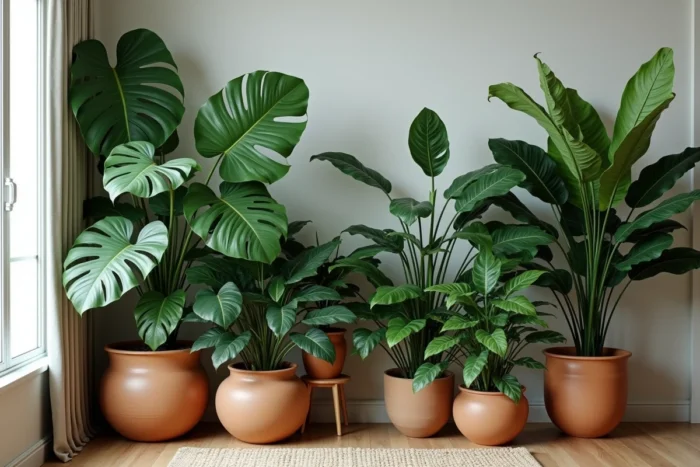
Biophilic design, meaning the connection to nature in the home, is the trend that has been growing the most since 2024, particularly in urban apartments. We are not talking about lining up ten small pots on a shelf, but about two or three large plants that visually anchor the space.
A fiddle leaf fig, a strelitzia, or a monstera deliciosa placed in a natural fiber planter radically changes the energy of a corner of the living room. Add a jute rug and linen curtains to enhance the effect. Responses vary on this point, but large plants generally tolerate low-light interiors better than one might think.
4. Multifunctional coffee table as the focal point of the living room
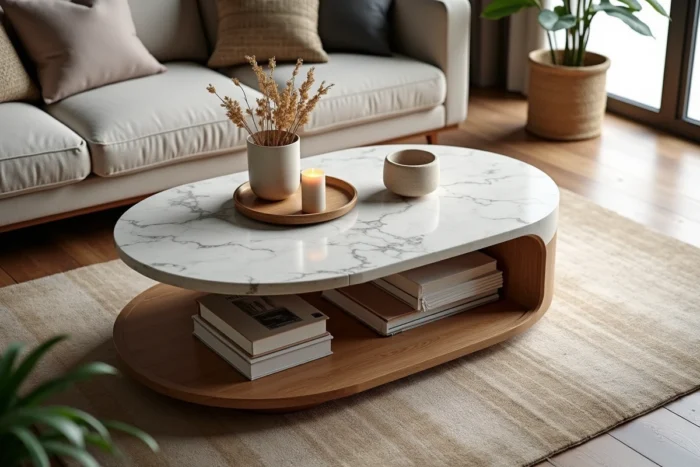
The coffee table is one of the most visible objects in the living room, yet it is often chosen by default. Replacing a basic rectangular model with a round table in raw wood, travertine, or textured metal immediately changes the visual flow of the room.
Models with integrated storage (removable tray, discreet drawer) help declutter the surface. A well-chosen coffee table redefines the style of the entire living room. Opt for a size proportionate to the sofa: about two-thirds of its length for a balanced result.
5. Adaptive zone lighting with accent lamps
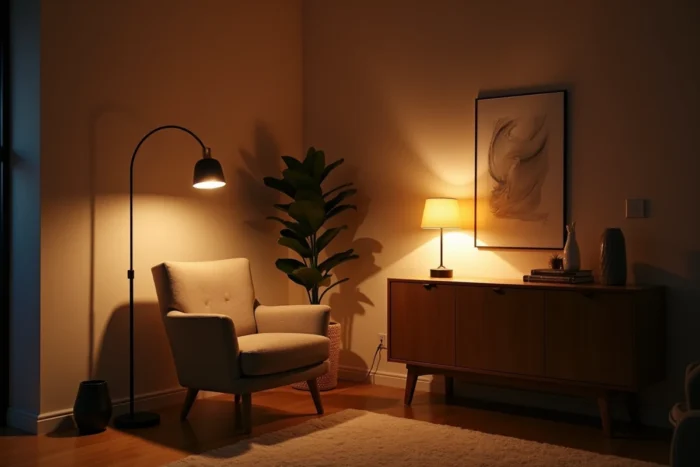
Lighting is the most underestimated lever in interior design. A single ceiling fixture provides flat, cold light. Multiplying light sources by zones (floor lamp near the sofa, sconce above a console, decorative garland on a shelf) creates adaptable atmospheres depending on the time of day.
Adjustable temperature bulbs, controllable via an app, allow you to switch from cool light during the day to warm light in the evening. Three well-placed light sources are better than a single central ceiling fixture.
6. Open shelf to display raw ceramics and natural objects
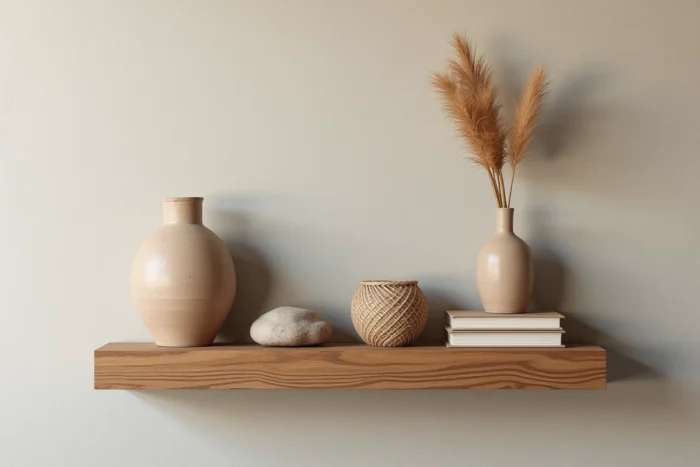
Replacing a closed cabinet with an open shelf changes the dynamics of a wall. You can display raw ceramic objects, a few horizontally placed books, a trailing plant, and one or two wooden accessories.
The basic rule: do not fill every space. Leaving space between objects creates an airy result, far from the overloaded bookshelf effect. Natural materials (stoneware, driftwood, linen) enhance the coherence with a trendy decor oriented towards well-being.
7. Layered textiles for immediate comfort
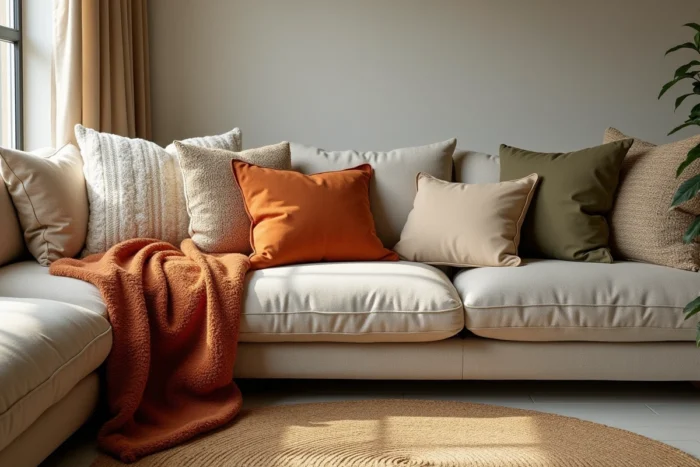
We often underestimate what a change of textiles can produce. Replacing the sofa cushions with wrinkled linen covers, adding a boucle wool throw on the armrest, and placing a long-pile rug under the coffee table: the layering of textures creates a feeling of comfort without touching the furniture.
- Linen or corduroy cushions in neutral or terracotta tones
- Wool or cotton gauze throw placed in contrasting material
- Thick rug or braided jute to anchor the seating area
This is one of the least expensive and most effective modifications to transform the atmosphere of a living room.
8. Large mirror placed on the floor
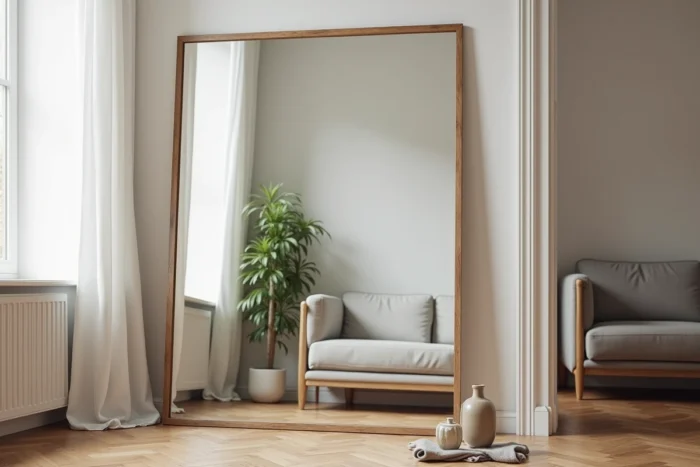
A large mirror leaning against a wall visually enlarges the space and reflects natural light towards the back of the room. This trick works in a narrow living room, an entryway, or a poorly lit bedroom.
Choose a frame that matches the desired style: natural wood for a Scandinavian vibe, black metal for a more graphic look, or a vintage gold frame for a reimagined classic touch. No need to drill: the mirror simply placed on the floor gives a very current relaxed effect.
9. Reading nook or dedicated quiet corner
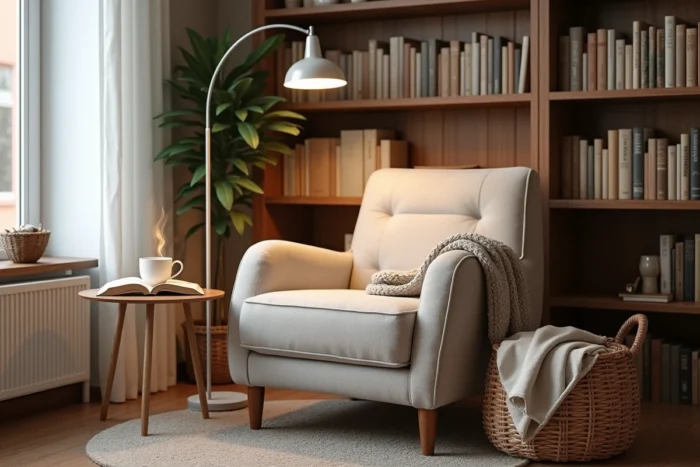
Dedicating a corner of a room to a specific use gives an impression of organized space, even in a small interior. A comfortable armchair, an adjustable reading lamp, and a small side table are enough to create a quiet corner.
You can enhance the effect by adding a lightweight screen or a low shelf to delineate the area without closing it off. This type of layout directly responds to the need for decompression zones in the home, a trend driven by well-being-centered design.
10. Accessories in immersive colors in small touches
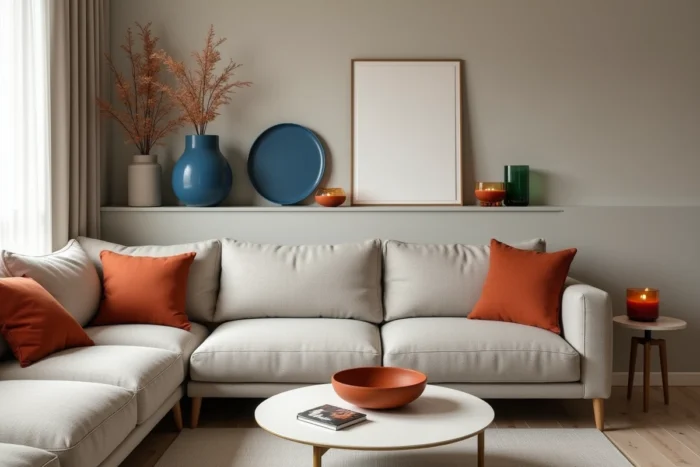
Immersive colors (deep terracotta, olive green, midnight blue, mustard) are at the heart of current decor trends. The simplest approach is to inject color through accessories rather than walls:
- Colored ceramic vases on a console or shelf
- Cushions and throws in one or two bold shades
- Photo frames or illustrations in matching tones
- Candles or decorative objects in tinted glass
Two to three touches of color are enough to energize a neutral interior without tipping into overload. Keep the main furniture in subdued tones and let the accessories carry the personality of the room.
Most of these layout ideas can be implemented in a weekend, without professional intervention. The common thread among all of them: they focus on targeted changes rather than a complete overhaul. A reworked wall, rethought lighting, or a few well-chosen textiles often produce a more striking result than a budget spread across the entire house.